We Use CookiesWe use cookies to enhance the security, performance, functionality and for analytical and promotional activities. By continuing to browse this site you are agreeing to our privacy policy

10 Best Small Water Softeners 2026 in the United States
How do we rank products for you?

Our technology thoroughly searches through the online shopping world, reviewing hundreds of sites. We then process and analyze this information, updating in real-time to bring you the latest top-rated products. This way, you always get the best and most current options available.

headphones-stars

Our Top Picks

#1

Winner

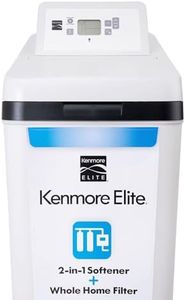
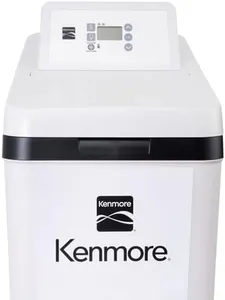
Kenmore Elite 520 Hybrid Water Softener & Whole House Filtration System – NSF-Certified 2-in-1 Softener + Filter – Great Tasting Drinking Water from Whole Home Softener

Rating
10.0
Chosen by1,151
Capacity
Size and Installation
Flow Rate

Most important from
114 reviews

Capacity
The system delivers exceptionally soft water, reducing hardness from very high levels to nearly soft.
Size and Installation
Installation is straightforward and can be done without shutting off the water, making setup hassle-free.
Flow Rate
Water pressure remains strong and consistent, supporting household needs effectively.

The Kenmore Elite 520 is a compact and smart water softener designed for families dealing with hard water and chlorine issues. It combines a water softener and a carbon filter in one unit, providing softer water and improved taste without the need for a separate filter. This 2-in-1 approach is convenient and space-saving, measuring just 20.5" x 15" x 48" and fitting well in smaller utility areas. Its flow rate of up to 8 gallons per minute supports strong water pressure for showers, dishwashers, and laundry, making it suitable for typical household water needs. The system uses an ion exchange method with a capacity of 0.98 cubic feet, which is enough for average family usage, though it might be limiting for very large households or extremely hard water conditions.

A standout feature is its AI-powered IntelliSoft technology that learns your water use patterns and regenerates only when necessary, reducing salt consumption by up to 40%. This makes the system more efficient and environmentally friendly compared to traditional systems that regenerate on fixed schedules. The unit is freestanding and powered by a corded electric source, simplifying installation but requiring an accessible power outlet. Maintenance is relatively low since the carbon filter is self-cleaning, eliminating the need for frequent filter replacements, although some users might find the initial setup and programming somewhat technical.

The system is NSF-certified, providing assurance about water quality and safety, and it comes with a solid warranty covering different components for up to 10 years. The Kenmore Elite 520 is well-suited for households wanting both softening and filtration in one efficient, space-conscious device, featuring smart salt-saving technology and manageable maintenance. Its capacity and flow rate make it best suited for average-sized families rather than very large homes.

Rating
10.0
Chosen by1,151
Capacity
Size and Installation
Flow Rate

Most important from
114 reviews

Capacity
The system delivers exceptionally soft water, reducing hardness from very high levels to nearly soft.
Size and Installation
Installation is straightforward and can be done without shutting off the water, making setup hassle-free.
Flow Rate
Water pressure remains strong and consistent, supporting household needs effectively.
#2

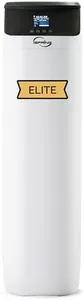
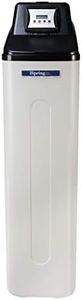
iSpring Whole House Water Softener System, 50,000 Grain High Capacity Removes Hardness with Automatic Backwash and Low Salt Alarm, Hardness & Scale Reduction in House and Commercial Water Use, WCS50KG

Rating
9.7
Capacity
Regeneration Type
Salt Usage

Most important from
13 reviews

Capacity
Transforms very hard city water dramatically, reducing hardness from over 350 PPM to less than 15 PPM, delivering noticeably softer water quality and maintaining strong water pressure.
Regeneration Type
Operates automatically with a smooth regeneration process that requires minimal user intervention, truly a set-and-forget system.
Salt Usage
Salt-saving technology and customization options adapt the softening level based on specific water hardness and household needs, enhancing efficiency and reducing salt use.
Size and Installation
Fits perfectly in tight spaces with a compact design that makes installation straightforward and hassle-free.

The iSpring Whole House Water Softener System offers a high capacity of 50,000 grains, making it suitable for effectively reducing hardness in both household and light commercial water supplies. Its ion exchange method uses a pre-filled resin tank that regenerates automatically with a backwash process, so you don’t have to manually clean or maintain the system frequently. This automatic regeneration also helps extend the resin’s life and keeps the water softener performing well over time.

With a compact and freestanding design, this unit fits nicely in tight spaces and supports different plumbing sizes (1" or ¾" NPT), which adds installation flexibility indoors. The size (about 18"x11"x42") is manageable, but weighing 102 pounds means it’s fairly heavy and might need help for setup. It features a low salt alarm and a salt-saving technology, which helps you monitor salt use and avoid overconsumption. The system adjusts softening levels based on your household size and water hardness, making it more efficient and tailored to your needs. It is designed only for cold water supply.

Maintenance is user-friendly thanks to the automatic features, but occasional salt refills are still required. The unit’s sturdy fiberglass tank and corrosion-resistant parts promise durability. iSpring also backs the product with good customer support, which is helpful if you run into issues or have questions. This softener suits homeowners looking for a reliable, low-maintenance solution to soften hard water throughout their home with a system that saves space and reduces salt use. If you need a simple, efficient system without the hassle of manual regeneration and limited installation space, this model is worth considering.

Rating
9.7
Capacity
Regeneration Type
Salt Usage

Most important from
13 reviews

Capacity
Transforms very hard city water dramatically, reducing hardness from over 350 PPM to less than 15 PPM, delivering noticeably softer water quality and maintaining strong water pressure.
Regeneration Type
Operates automatically with a smooth regeneration process that requires minimal user intervention, truly a set-and-forget system.
Salt Usage
Salt-saving technology and customization options adapt the softening level based on specific water hardness and household needs, enhancing efficiency and reducing salt use.
Size and Installation
Fits perfectly in tight spaces with a compact design that makes installation straightforward and hassle-free.
#3

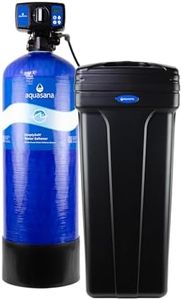
Aquasana SimplySoft® 60,000 Grain Water Softener - Whole House Hard Water Reduction - Base Tank & Cabinet System WH-SF60-BASE

Rating
9.4
Regeneration Type
Salt Usage
Size and Installation

Most important from
100 reviews

Regeneration Type
The clean and regeneration cycles run quietly and efficiently, reducing the usual hassle associated with traditional water softeners.
Salt Usage
This system offers excellent value by balancing quality performance with lower salt and water consumption during regeneration.
Size and Installation
Installation requires some basic plumbing skills but is straightforward, and once set up, the system operates smoothly with minimal maintenance.
Maintenance Requirements
Installation requires some basic plumbing skills but is straightforward, and once set up, the system operates smoothly with minimal maintenance.

The Aquasana SimplySoft 60,000 Grain Water Softener is designed for larger households with 5 or more people and multiple bathrooms, making it a strong choice if you want to protect your pipes and appliances from hard water damage. It uses ion exchange technology to reduce hard water minerals, delivering softer water throughout your home, which can help with skin, hair, and keeping dishes and clothes looking better. Its capacity of 60,000 grains is suitable for heavy use, and it supports a good flow rate of up to 16.6 gallons per minute, so it won’t slow down your water pressure even with multiple taps running.

Installation is for whole-house entry, meaning it treats all incoming water, but it is a fairly large unit at 30"L x 16"W x 43"H and weighs about 120 pounds, so you’ll want to make sure you have the space and possibly professional help to set it up. It operates manually and is IAPMO certified, providing reassurance about water quality standards. One of its notable benefits is reduced salt and water use during regeneration compared to standard systems, saving you money and hassle.

However, it requires regular maintenance like adding salt and possibly using an optional pre-filter for city or well water to keep it running smoothly. Its warranty (5/10 years) offers decent support, but since it is not fully automatic, some hands-on care is necessary. If you want efficient soft water for a busy home and don’t mind the size and maintenance, this system proves to be a reliable choice.

Rating
9.4
Regeneration Type
Salt Usage
Size and Installation

Most important from
100 reviews

Regeneration Type
The clean and regeneration cycles run quietly and efficiently, reducing the usual hassle associated with traditional water softeners.
Salt Usage
This system offers excellent value by balancing quality performance with lower salt and water consumption during regeneration.
Size and Installation
Installation requires some basic plumbing skills but is straightforward, and once set up, the system operates smoothly with minimal maintenance.
Maintenance Requirements
Installation requires some basic plumbing skills but is straightforward, and once set up, the system operates smoothly with minimal maintenance.

Buying Guide for the Best Small Water Softeners

Choosing the right small water softener can significantly improve the quality of water in your home, making it more pleasant for drinking, cooking, and cleaning. Water softeners work by removing minerals like calcium and magnesium that cause water hardness. When selecting a water softener, it's important to consider several key specifications to ensure you get the best fit for your needs. Here are the main factors to consider and how to navigate them.
CapacityCapacity refers to the amount of water a softener can treat before it needs to regenerate. This is important because it determines how often the system will need to go through a regeneration cycle, which can affect both water and salt usage. Capacities are usually measured in grains per gallon (GPG). For small households or apartments, a capacity of 16,000 to 32,000 grains is typically sufficient. For larger households, you might need a higher capacity. To pick the right one, consider the number of people in your household and your average water usage.
Regeneration TypeRegeneration is the process by which the water softener cleans itself and recharges its resin beads. There are two main types: time-initiated and demand-initiated. Time-initiated systems regenerate at set intervals, regardless of water usage, which can be less efficient. Demand-initiated systems regenerate based on actual water usage, making them more efficient and cost-effective. If you have variable water usage, a demand-initiated system might be the best choice for you.
Salt UsageSalt usage refers to the amount of salt the water softener uses during the regeneration process. This is important because it affects the ongoing cost and maintenance of the system. High-efficiency models use less salt, which can save money and reduce environmental impact. If you are concerned about salt consumption, look for models that are designed to be salt-efficient. Consider your willingness to regularly add salt and the cost of salt in your area when making your decision.
Size and InstallationThe physical size of the water softener is crucial, especially if you have limited space. Small water softeners are designed to fit in tight spaces, such as under sinks or in small utility rooms. Make sure to measure the space where you plan to install the unit and compare it to the dimensions of the water softener. Additionally, consider whether you will install it yourself or hire a professional. Some models are designed for easy DIY installation, while others may require professional help.
Flow RateFlow rate is the amount of water the softener can process per minute, usually measured in gallons per minute (GPM). This is important because it affects the water pressure in your home. A higher flow rate is necessary for larger households or homes with multiple bathrooms to ensure consistent water pressure. For small households or single-person use, a lower flow rate may be sufficient. To choose the right flow rate, consider the number of water fixtures in your home and your peak water usage times.
Maintenance RequirementsMaintenance requirements include tasks like adding salt, cleaning the brine tank, and occasionally replacing parts. This is important because it affects the long-term convenience and cost of owning the water softener. Some models are designed to be low-maintenance, with features like self-cleaning systems and alerts for when maintenance is needed. If you prefer a hands-off approach, look for models with minimal maintenance requirements. Consider your willingness and ability to perform regular maintenance when making your choice.

FAQ