We Use CookiesWe use cookies to enhance the security, performance, functionality and for analytical and promotional activities. By continuing to browse this site you are agreeing to our privacy policy

10 Best Bookshelf Speakers 2026 in the United States
How do we rank products for you?

Our technology thoroughly searches through the online shopping world, reviewing hundreds of sites. We then process and analyze this information, updating in real-time to bring you the latest top-rated products. This way, you always get the best and most current options available.

headphones-stars

Our Top Picks

#1

Winner

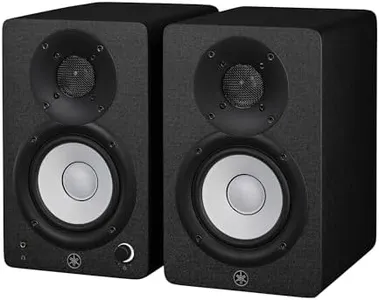
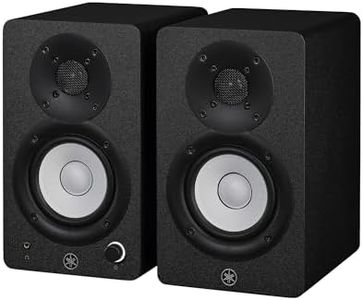
Yamaha HS4 Powered Studio Monitor in Black, Pair (HS4 B)

Rating
10.0
Chosen by1,452
Frequency Response
Power Handling

Most important from
2289 reviews

Frequency Response
Clear and crisp treble, punchy mids, and surprisingly good bass for its size.
Power Handling
Perfect for desktop use despite initial skepticism about their power.

The Yamaha HS4 Powered Studio Monitor is designed to provide accurate sound reproduction, making it a solid choice for those seeking bookshelf speakers primarily for music production or studio monitoring. With a frequency response range of 60 Hz to 22 kHz, it captures the essential low and high frequencies, ensuring detailed sound playback. Its 4.5-inch cone woofer and 1-inch dome tweeter work well together to deliver a balanced audio experience, making it suitable for various genres of music and content creation.

One of the standout features is the room control and high trim response controls, allowing users to adjust the sound output based on their room's acoustics. This adaptability can enhance the listening experience, especially in different environments.

The HS4 is not without its drawbacks. The power output is 26 watts per speaker, which may not be sufficient for larger spaces or for those looking for a more powerful sound. The size of the woofer (4.5 inches) may also limit the bass response compared to larger models, which could disappoint bass enthusiasts. Additionally, the design is more tailored for professional use rather than casual home listening, meaning it may not suit everyone’s taste if you’re simply looking for speakers for general music enjoyment. Given its features, the HS4 is an excellent choice for aspiring musicians, audio engineers, or anyone serious about sound quality.

Rating
10.0
Chosen by1,452
Frequency Response
Power Handling

Most important from
2289 reviews

Frequency Response
Clear and crisp treble, punchy mids, and surprisingly good bass for its size.
Power Handling
Perfect for desktop use despite initial skepticism about their power.
#2

YAMAHA Hs5 Powered Studio Monitor, Pair

Rating
9.7
Frequency Response
Cabinet Design

Most important from
397 reviews

Frequency Response
Perfectly balanced frequency spectrum ideal for small studio production and high-fidelity listening.
Cabinet Design
While the bass is tame, it's still suitable for genres like hip hop.

The Yamaha HS5 Powered Studio Monitor is a pair of high-quality speakers designed for studio use. With a two-way bass reflex bi-amplified setup, it features a 5-inch cone woofer and a 1-inch dome tweeter, ensuring detailed sound reproduction. The frequency response range of 54 Hz to 30 kHz allows for a broad spectrum of audio clarity, making it suitable for accurate music and sound production.

The 70-watt power amplification is divided into 45W for low frequencies and 25W for high frequencies, providing robust and balanced sound output. Connectivity is versatile with XLR and TRS inputs, accepting both balanced and unbalanced signals, which accommodates various audio sources easily. The speakers are active, meaning they have built-in amplification, so you don't need an external amp, simplifying setup and use.

As studio monitors, they emphasize sonic purity without coloration, which might not appeal to users who prefer enhanced or bass-heavy sound profiles. Additionally, while they are marketed as floor-standing, their size and weight (32.5 pounds) might make them less ideal for small shelves or tight spaces. Despite not being waterproof or having features like an MP3 player, they excel in providing high-fidelity sound for professional or home studio environments. These speakers are best suited for musicians, producers, and audiophiles who require accurate sound reproduction and are less focused on additional multimedia functionalities.

Rating
9.7
Frequency Response
Cabinet Design

Most important from
397 reviews

Frequency Response
Perfectly balanced frequency spectrum ideal for small studio production and high-fidelity listening.
Cabinet Design
While the bass is tame, it's still suitable for genres like hip hop.
#3

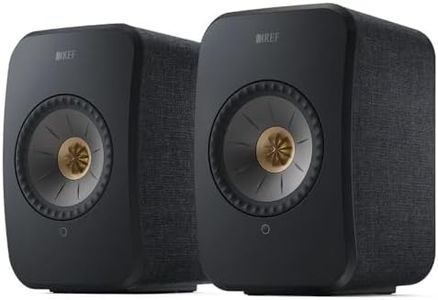
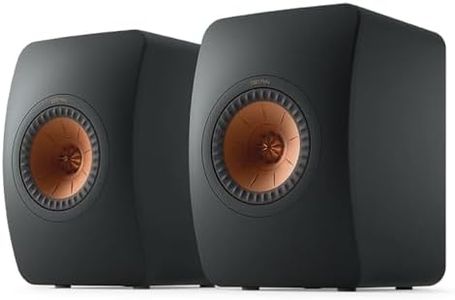
KEF LSX II Wireless HiFi Speaker System (Carbon Black)

Rating
9.4
Frequency Response
Driver Size
Cabinet Design

Most important from
184 reviews

Frequency Response
The speakers deliver a rich, warm, and full soundstage with crisp highs, present mids, and surprisingly tight bass for their size.
Driver Size
The LSX II’s soundstage is wide and immersive, with a wider sweet spot thanks to the coaxial driver design, reducing strict listener placement requirements.
Cabinet Design
Their compact and timeless design combines clean lines with a luxurious feel, making them a stylish addition to any space.

The KEF LSX II Wireless speakers stand out as a compact, high-quality bookshelf speaker system designed for those who want excellent sound without the bulk. With a frequency response starting at 54 Hz, these speakers deliver clear and detailed audio suitable for most music genres and casual TV watching, though they don’t reach the very lowest bass frequencies typical of larger speakers. Their 4.5-inch woofers and 0.75-inch tweeters work well together to create a balanced sound, providing good clarity and midrange presence. The speakers can handle up to 200 watts of power, offering enough volume for small to medium-sized rooms without distortion.

One of the biggest perks is the wireless connectivity: Wi-Fi, Bluetooth, AirPlay 2, Chromecast, and USB-C inputs make it easy to connect with TVs, laptops, or streaming services like Spotify and Tidal. This flexibility suits users who want a clean setup without multiple cables. The compact cabinet design allows placement on bookshelves, desks, or even wall mounts, fitting well in varied spaces. However, they are not waterproof, so they are strictly for indoor use.

The speakers come with a simple app for control and can connect with other wireless speakers to create multi-room audio, which is great if you want music throughout your home. While these speakers might not satisfy someone looking for deep bass or extremely high volume levels, their sound quality, ease of use, and stylish compact design make them a strong choice for anyone wanting premium bookshelf speakers with modern features.

Rating
9.4
Frequency Response
Driver Size
Cabinet Design

Most important from
184 reviews

Frequency Response
The speakers deliver a rich, warm, and full soundstage with crisp highs, present mids, and surprisingly tight bass for their size.
Driver Size
The LSX II’s soundstage is wide and immersive, with a wider sweet spot thanks to the coaxial driver design, reducing strict listener placement requirements.
Cabinet Design
Their compact and timeless design combines clean lines with a luxurious feel, making them a stylish addition to any space.

Buying Guide for the Best Bookshelf Speakers

Choosing the right bookshelf speakers can greatly enhance your audio experience, whether you're listening to music, watching movies, or playing games. The key is to understand the various specifications and how they align with your needs and preferences. Here are some important specs to consider when selecting bookshelf speakers.
Frequency ResponseFrequency response refers to the range of sound that the speakers can reproduce, measured in Hertz (Hz). This spec is important because it determines how well the speakers can handle different types of audio, from deep bass to high treble. A wider frequency response range means the speakers can produce a more complete and accurate sound. Typically, a range of 20Hz to 20kHz is considered ideal for full-range audio. If you enjoy bass-heavy music, look for speakers with a lower minimum frequency. For general listening, a balanced range is usually sufficient.
SensitivitySensitivity measures how effectively the speakers convert power into sound, expressed in decibels (dB). This spec is important because it affects the loudness of the speakers at a given power level. Higher sensitivity means the speakers can produce louder sound with less power. Sensitivity ratings usually range from 85dB to 100dB. If you have a low-powered amplifier, look for speakers with higher sensitivity (90dB or above) to ensure adequate volume. For high-powered systems, sensitivity is less critical, but higher values can still provide better efficiency.
ImpedanceImpedance is the resistance the speakers provide to the electrical signal from the amplifier, measured in ohms. This spec is important because it affects the compatibility with your amplifier. Common impedance values are 4 ohms, 6 ohms, and 8 ohms. Most amplifiers are designed to work with 8-ohm speakers, but some can handle lower impedance. If you have a standard amplifier, 8-ohm speakers are a safe choice. If your amplifier supports lower impedance, you can opt for 4 or 6-ohm speakers for potentially better performance.
Power HandlingPower handling indicates the maximum amount of power the speakers can handle, measured in watts. This spec is important because it ensures the speakers can operate safely without damage at high volumes. Power handling is usually divided into two values: RMS (continuous power) and peak (maximum power). If you like to play your music loud, look for speakers with higher power handling, especially RMS values. For casual listening, lower power handling is usually sufficient.
Driver SizeDriver size refers to the diameter of the speaker's drivers, typically measured in inches. This spec is important because it influences the sound quality and the ability to reproduce different frequencies. Larger drivers (6-8 inches) can produce better bass and fuller sound, while smaller drivers (4-5 inches) are better for midrange and treble. If you prefer deep bass and powerful sound, opt for larger drivers. For a more balanced sound or if space is a concern, smaller drivers may be more suitable.
Cabinet DesignCabinet design refers to the construction and materials used for the speaker enclosure. This spec is important because it affects the sound quality and resonance. Solid, well-built cabinets with good internal bracing can reduce unwanted vibrations and improve sound clarity. Look for cabinets made from high-quality materials like MDF or wood. If aesthetics are important, consider the finish and design that matches your room decor. For optimal sound, prioritize sturdy construction over appearance.

FAQ