We Use CookiesWe use cookies to enhance the security, performance, functionality and for analytical and promotional activities. By continuing to browse this site you are agreeing to our privacy policy

10 Best Mic Preamps 2026 in the United States

How do we rank products for you?

Our technology thoroughly searches through the online shopping world, reviewing hundreds of sites. We then process and analyze this information, updating in real-time to bring you the latest top-rated products. This way, you always get the best and most current options available.

headphones-stars

Our Top Picks

#1

Winner

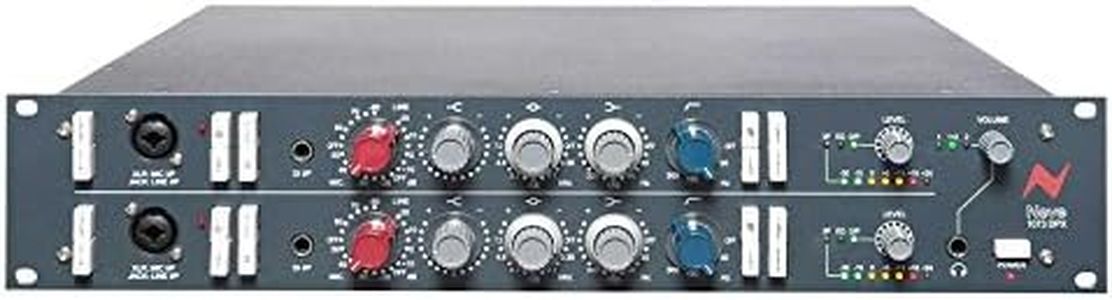
Neve 1073DPX Dual Microphone Preamplifier / EQ

Rating
10.0
Chosen by1,409
Form Factor

Most important from
4 reviews

Form Factor
This unit is best suited for studio use due to its substantial size and weight, making it less ideal for mobile recording setups.

The Neve 1073DPX is a dual microphone preamplifier and EQ unit highly regarded in the audio world for its warm, classic sound. It fits well for musicians and audio engineers who want that vintage character and tonal richness in their recordings. Known for its strong gain, it can boost quiet microphone signals effectively, making it suitable for a wide range of microphones and recording situations.

The noise floor is generally low, so it maintains clarity without unwanted hiss, and its harmonic distortion is part of the appealing, musical sound it produces rather than a flaw. The unit provides standard input and output impedance that works well with most professional microphones and gear, plus it includes phantom power needed for condenser mics.

Its form factor is quite large and heavy, weighing around 25 pounds, which means it’s better suited for a studio setup rather than mobile use. Some users may find the size and price less convenient if they only need a simple preamp. Also, while the built-in EQ is a useful feature, those seeking a more transparent or clean boost might want to consider other options. In summary, the Neve 1073DPX is a strong choice for anyone looking to add a warm, characterful preamp and EQ to their studio, especially where vintage sound and build quality are priorities.

Rating
10.0
Chosen by1,409
Form Factor

Most important from
4 reviews

Form Factor
This unit is best suited for studio use due to its substantial size and weight, making it less ideal for mobile recording setups.
#2

Neve 1073SPX Microphone Preamp and EQ

Rating
8.8
Gain

Most important from
22 reviews

Gain
Transforms any microphone sound with ease—just plug in and adjust gain for immediate improvement.

The Neve 1073SPX is a classic-style microphone preamp and EQ designed for users seeking rich, vintage sound with extensive control. It provides up to 80dB of gain, sufficient for most microphones, including quieter dynamic and ribbon types. Its Class A transformer-balanced circuitry delivers a warm, musical tone favored by many professionals, while the built-in 3-band EQ allows direct shaping of sound on the unit, adding character without heavy reliance on software.

This unit includes polarity reverse and a highpass filter, both useful features for cleaning up recordings, and offers phantom power essential for condenser microphones. Its connectors include XLR and 6.35mm jack inputs, along with a USB option for flexible connectivity. The 1073SPX is relatively heavy (over 15 pounds) and larger than many modern preamps, making it less portable and less suited for tight setups. It is also a more expensive and specialized piece compared to basic preamps.

The preamp is ideal for professionals who want studio-grade sound with classic tonal qualities, especially in environments where space and budget constraints are minimal.

Rating
8.8
Gain

Most important from
22 reviews

Gain
Transforms any microphone sound with ease—just plug in and adjust gain for immediate improvement.
#3

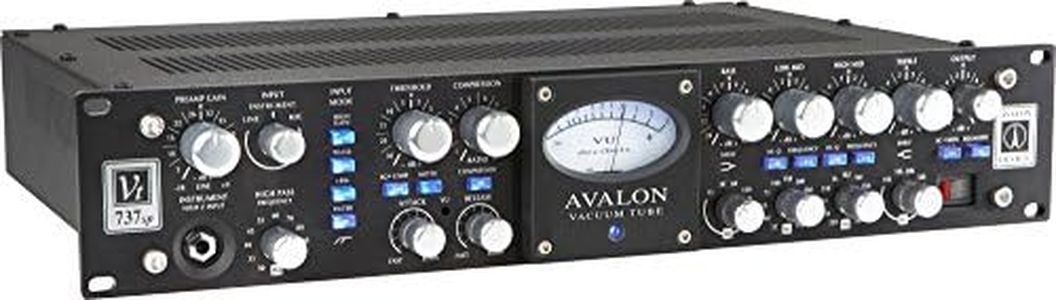
Avalon VT-737sp Tube Channel Strip

Rating
8.8
Gain

Most important from
3 reviews

Gain
Quality control issues were noted, with defects such as an improperly attached input gain knob.

The Avalon VT-737sp Tube Channel Strip is a high-quality mic preamp that excels particularly in professional studio settings, thanks to its warm tube sound and versatile features. One of its standout strengths is the impressive gain range of +58dB, giving you ample amplification for various microphones. The use of four dual triode vacuum tubes in its circuit design contributes to a rich, warm sound that many engineers and musicians appreciate. It also offers a solid noise floor, which is important for achieving clean recordings without unwanted background hiss.

The input and output impedance specifications are well thought out, with transformer balanced input options that can handle both microphone and instrument levels effectively. Phantom power is available, enabling the use of condenser microphones, which are common in studio work.

On the flip side, the Avalon VT-737sp is quite hefty at 28.3 pounds and large in size, which may not be ideal for mobile setups or small studios. While its build quality is solid, the metal construction adds to its weight, making it less portable. The price point is also on the higher end, which might be a consideration for those on a tight budget looking for a mic preamp. Furthermore, the complexity of the settings may be overwhelming for beginners who are not accustomed to working with such advanced equipment.

Rating
8.8
Gain

Most important from
3 reviews

Gain
Quality control issues were noted, with defects such as an improperly attached input gain knob.

Buying Guide for the Best Mic Preamps

When it comes to choosing a mic preamp, it's essential to understand that this device plays a crucial role in capturing and enhancing the sound quality of your recordings. A mic preamp amplifies the weak signal from a microphone to a level that can be processed by other audio equipment. The right preamp can add warmth, clarity, and character to your recordings, making it a vital component for any recording setup. To make an informed decision, you need to consider several key specifications and how they align with your specific needs and recording environment.
GainGain refers to the amount of amplification the preamp provides to the microphone signal. This is important because different microphones and recording situations require different levels of amplification. Low-gain preamps (up to 40 dB) are suitable for loud sound sources like drums, while medium-gain preamps (40-60 dB) are versatile for most applications, including vocals and instruments. High-gain preamps (60 dB and above) are necessary for quiet sound sources or ribbon microphones. Choose a preamp with sufficient gain for your specific recording needs to ensure clear and noise-free recordings.
Noise FloorThe noise floor is the level of background noise that the preamp introduces into the signal. A lower noise floor is crucial for achieving clean recordings, especially in quiet environments or when recording soft sounds. Preamps with a noise floor below -120 dBu are considered very quiet and are ideal for professional recordings. For home studios or less critical applications, a noise floor around -100 dBu may be acceptable. Consider the noise floor in relation to your recording environment and the type of sounds you will be capturing.
Harmonic DistortionHarmonic distortion refers to the additional harmonics that a preamp introduces to the signal. This can add warmth and character to the sound, which can be desirable in certain genres of music. Low harmonic distortion (below 0.01%) is preferred for clean and transparent recordings, while higher harmonic distortion (above 0.1%) can add a pleasing coloration to the sound. Decide whether you want a clean or colored sound and choose a preamp with the appropriate level of harmonic distortion.
Input and Output ImpedanceInput and output impedance affect how the preamp interacts with microphones and other audio equipment. Matching the impedance of the preamp with the microphone ensures optimal signal transfer and sound quality. Most modern preamps have a standard input impedance of around 1.5 kΩ, which works well with most microphones. However, some vintage or ribbon microphones may require a different impedance. Output impedance should be low (below 100 Ω) to ensure compatibility with various recording devices. Check the specifications of your microphones and recording equipment to choose a preamp with suitable impedance.
Phantom PowerPhantom power is a feature that supplies power to condenser microphones through the preamp. This is important because condenser microphones require an external power source to operate. Most preamps provide 48V phantom power, which is standard for condenser microphones. Ensure that the preamp you choose has phantom power if you plan to use condenser microphones. If you only use dynamic or ribbon microphones, phantom power may not be necessary, but it's still a useful feature to have for future flexibility.
Form FactorThe form factor of a preamp refers to its physical size and design. Preamps come in various forms, including desktop units, rack-mounted units, and portable units. Desktop units are convenient for home studios and small setups, while rack-mounted units are ideal for professional studios with multiple pieces of equipment. Portable units are great for on-the-go recording. Consider your recording environment and how much space you have available when choosing the form factor of your preamp.

FAQ