We Use CookiesWe use cookies to enhance the security, performance, functionality and for analytical and promotional activities. By continuing to browse this site you are agreeing to our privacy policy

10 Best Synthesizers 2026 in the United States
How do we rank products for you?

Our technology thoroughly searches through the online shopping world, reviewing hundreds of sites. We then process and analyze this information, updating in real-time to bring you the latest top-rated products. This way, you always get the best and most current options available.

headphones-stars

Our Top Picks

#1

Winner

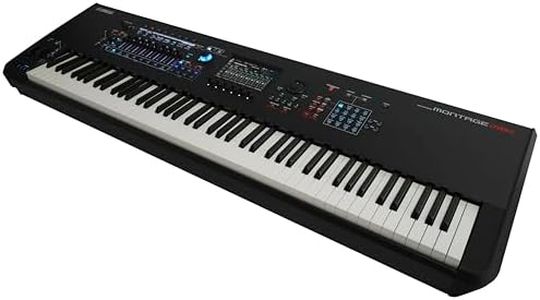
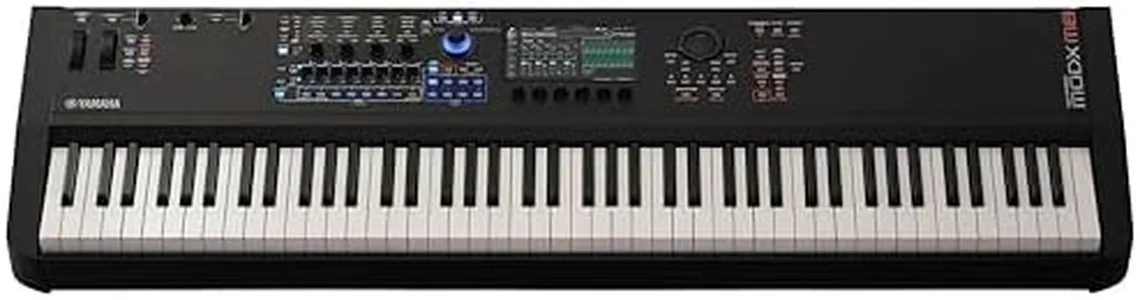
Yamaha 88-Key Music Synthesizer, Graded Hammer Action, Realistic Feel, Performance Focused for Next Generation Sound Exploration, Expressive Control and Optimized Workflow MODX M8

Rating
10.0
Chosen by1,322
Type of Synthesis

Most important from
10 reviews

Type of Synthesis
This keyboard delivers exceptional sound quality that rivals much more expensive models.

The Yamaha MODX M8 is a professional 88-key synthesizer designed with pianists in mind, offering a realistic playing experience thanks to its graded hammer action keyboard that feels heavier in the low keys and lighter in the high keys. It features three powerful sound engines that combine classic analog synthesis, modern FM synthesis, and realistic acoustic instruments, giving you a broad palette of sounds for creative exploration. With 88 keys and advanced sequencing options, it supports complex performances and compositions.

The synthesizer excels in expressive control, featuring eight physical faders and a Super Knob for hands-on real-time sound manipulation, complemented by an intuitive color touchscreen and dedicated knobs for quick editing. This makes navigating sounds and tweaking parameters straightforward, even if you’re not deeply technical. Connectivity-wise, the MODX M8 seamlessly integrates with music software via the Expanded Softsynth Plugin, allowing you to create and edit sounds right in your digital audio workstation (DAW).

Weighing 40.5 pounds, it is relatively light for an 88-key keyboard, though it might still be less portable for frequent gigging compared to smaller synths. The MODX M8 is best suited for serious musicians who want a versatile, performance-focused synthesizer with quality piano feel and broad synthesis options, rather than beginners looking for a simpler setup.

Rating
10.0
Chosen by1,322
Type of Synthesis

Most important from
10 reviews

Type of Synthesis
This keyboard delivers exceptional sound quality that rivals much more expensive models.
#2

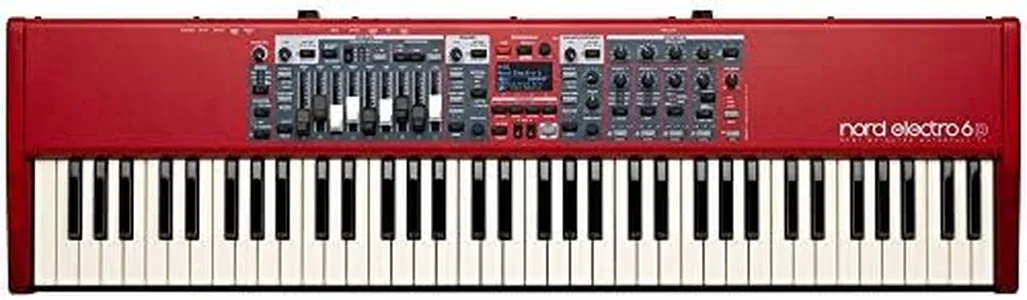
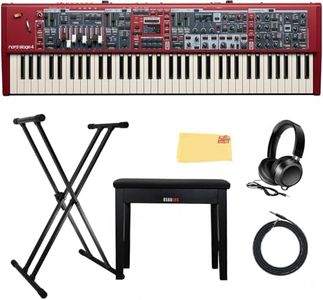
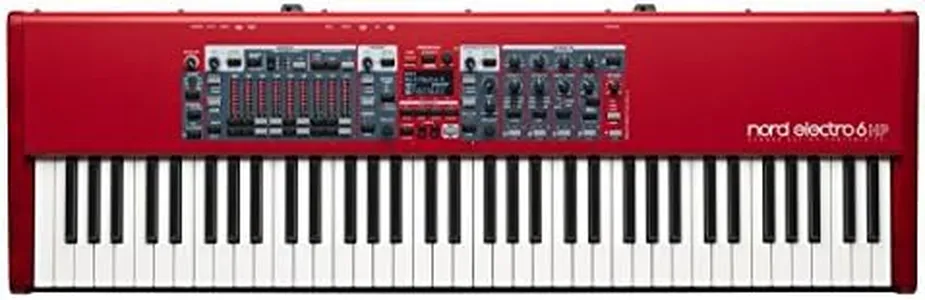
Nord Electro 6HP Stage Piano, 73-Note Hammer Action Portable Keybed

Rating
8.8
User Interface

Most important from
4 reviews

User Interface
Setting up and customizing the patches involves a steep learning curve, requiring dedicated time to fully optimize the sound settings.

The Nord Electro 6HP is a versatile stage keyboard that blends piano, organ, and sample-based synthesis, making it a hybrid between a synthesizer and a high-quality digital piano. Its 73-key hammer action keyboard feels very natural for piano players, especially those looking for authentic electric and acoustic piano sounds, as well as organ tones. The three independent sound sections (Organ, Piano, and Sample Synth) allow for layering or splitting sounds, offering creative flexibility in live performances.

Polyphony is extended in the piano and sample sections, which helps maintain rich, full sound without notes cutting off prematurely. However, the synth capabilities focus more on sample playback rather than traditional oscillator-based synthesis, so it may not satisfy users looking for deep sound design or complex modulation options typical of dedicated synthesizers. Connectivity is solid with USB for computer interface and external keyboard control, supporting stage and studio use. The user interface is friendly, featuring organize and live modes that simplify managing sounds during performances.

Though not the most compact or lightweight option at 25 pounds, it remains portable enough for gigs. This keyboard is ideal for players prioritizing quality piano and organ sounds with some sample synth layering, rather than those seeking a fully featured modular or analog-style synthesizer.

Rating
8.8
User Interface

Most important from
4 reviews

User Interface
Setting up and customizing the patches involves a steep learning curve, requiring dedicated time to fully optimize the sound settings.
#3

Nord Electro 6D 73 Stage Piano, 73-Note Semi-Weighted Waterfall Keybed

Rating
8.5
User Interface
Connectivity

Most important from
19 reviews

User Interface
The ability to tweak sounds in real-time and customize presets enhances the user experience, especially after overcoming the initial setup challenges.
Connectivity
Connectivity options are robust, but users recommend additional accessories like expression/volume pedals and damper/sustain pedals for optimal performance.

The Nord Electro 6D 73 Stage Piano is a versatile and portable synthesizer ideal for intermediate players. Its 73-note semi-weighted waterfall keybed is known for its responsiveness and is perfect for fast organ and synth licks. The instrument offers three independent sound sections—Organ, Piano, and Sample Synth—that can be layered or split, adding flexibility to your performances. With six keyboard split points and split point crossfade functionality, it suits a variety of playing styles and configurations.

The Organize/Page mode allows for efficient management of sound programs, while the 4 Live Slots feature ensures quick access during live performances. The piano section boasts an extensive selection from the Nord Piano Library, with enhanced voice polyphony and new piano filters, offering rich and varied sound options. The Sample Synth section includes expanded memory and polyphony, accommodating a wide range of samples from the Nord Sample Library 3.0.

Connectivity is robust, featuring a USB interface, and it supports external keyboard control, enhancing its versatility. However, at 20.3 pounds, it is relatively lightweight but may still be cumbersome for some to transport frequently. The user interface is intuitive, but navigating the Organize mode may require a learning curve for new users. Additionally, while it provides a rich feature set, it may not offer the deepest synthesis capabilities compared to other specialized synthesizers in the market.

Rating
8.5
User Interface
Connectivity

Most important from
19 reviews

User Interface
The ability to tweak sounds in real-time and customize presets enhances the user experience, especially after overcoming the initial setup challenges.
Connectivity
Connectivity options are robust, but users recommend additional accessories like expression/volume pedals and damper/sustain pedals for optimal performance.

Buying Guide for the Best Synthesizers

Choosing the right synthesizer can be a thrilling yet daunting task, especially with the wide variety of options available. Synthesizers are electronic instruments that generate audio signals which can be transformed into sound. They are used in various music genres and can produce a vast array of sounds, from traditional instruments to unique, otherworldly tones. To find the best synthesizer for you, it's important to understand the key specifications and how they align with your musical needs and preferences.
Type of SynthesisThe type of synthesis refers to the method a synthesizer uses to generate sound. Common types include subtractive, FM (frequency modulation), wavetable, and granular synthesis. Subtractive synthesis is great for classic analog sounds, FM synthesis is known for its complex and metallic tones, wavetable synthesis offers a wide range of evolving sounds, and granular synthesis is perfect for experimental textures. Your choice should depend on the kind of music you want to create. If you're into classic rock or pop, subtractive might be your go-to. For more modern or experimental music, FM or wavetable could be more suitable.
PolyphonyPolyphony refers to the number of notes a synthesizer can play simultaneously. Monophonic synthesizers can play only one note at a time, which is ideal for bass lines and lead melodies. Polyphonic synthesizers can play multiple notes at once, making them suitable for chords and more complex arrangements. If you plan to play intricate pieces or need to layer sounds, a polyphonic synthesizer with higher polyphony (e.g., 8, 16, or more voices) would be beneficial. For simpler, single-note lines, a monophonic synthesizer might suffice.
OscillatorsOscillators are the primary sound generators in a synthesizer. They produce waveforms that form the basis of the sound. The number and type of oscillators can greatly affect the sound's richness and complexity. More oscillators allow for thicker, more complex sounds. Common waveforms include sine, square, sawtooth, and triangle, each offering a different tonal quality. If you want rich, layered sounds, look for synthesizers with multiple oscillators. For simpler, more straightforward sounds, fewer oscillators might be enough.
FiltersFilters shape the sound by removing certain frequencies. The most common types are low-pass, high-pass, band-pass, and notch filters. Low-pass filters remove high frequencies, making the sound warmer, while high-pass filters remove low frequencies, making the sound brighter. Band-pass filters allow a specific range of frequencies to pass through, and notch filters remove a specific range. Filters are crucial for sound design, allowing you to sculpt the tone to your liking. Depending on your music style, you might prefer a synthesizer with versatile filter options.
ModulationModulation refers to the ability to change a sound parameter over time, adding movement and complexity to the sound. Common modulation sources include LFOs (low-frequency oscillators) and envelopes. LFOs can modulate parameters like pitch, filter cutoff, and amplitude, creating effects like vibrato and tremolo. Envelopes shape the sound's attack, decay, sustain, and release (ADSR). If you want dynamic, evolving sounds, look for synthesizers with extensive modulation options. For more static sounds, basic modulation capabilities might be sufficient.
ConnectivityConnectivity options determine how you can integrate the synthesizer with other equipment. Common connections include MIDI, USB, CV/Gate, and audio outputs. MIDI and USB allow you to connect the synthesizer to computers and other MIDI-compatible devices, essential for studio setups. CV/Gate is used for connecting to modular synthesizers and other analog gear. Audio outputs are necessary for connecting to speakers, mixers, or recording devices. Consider your existing setup and how you plan to use the synthesizer to determine the necessary connectivity options.
User InterfaceThe user interface affects how easily you can navigate and control the synthesizer. Some synthesizers have a lot of knobs, sliders, and buttons, providing hands-on control, while others rely more on menus and screens. A more tactile interface can be more intuitive and faster for live performance, while a menu-driven interface might offer deeper editing capabilities. Think about how you prefer to interact with your instrument and whether you need quick access to parameters or are comfortable diving into menus for detailed sound design.

FAQ